Exoplanetary Systems,
Habitability & Data Pipelines
Combining high-precision observational data, Bayesian modeling, and Python pipelines to study planetary habitability and system architectures.
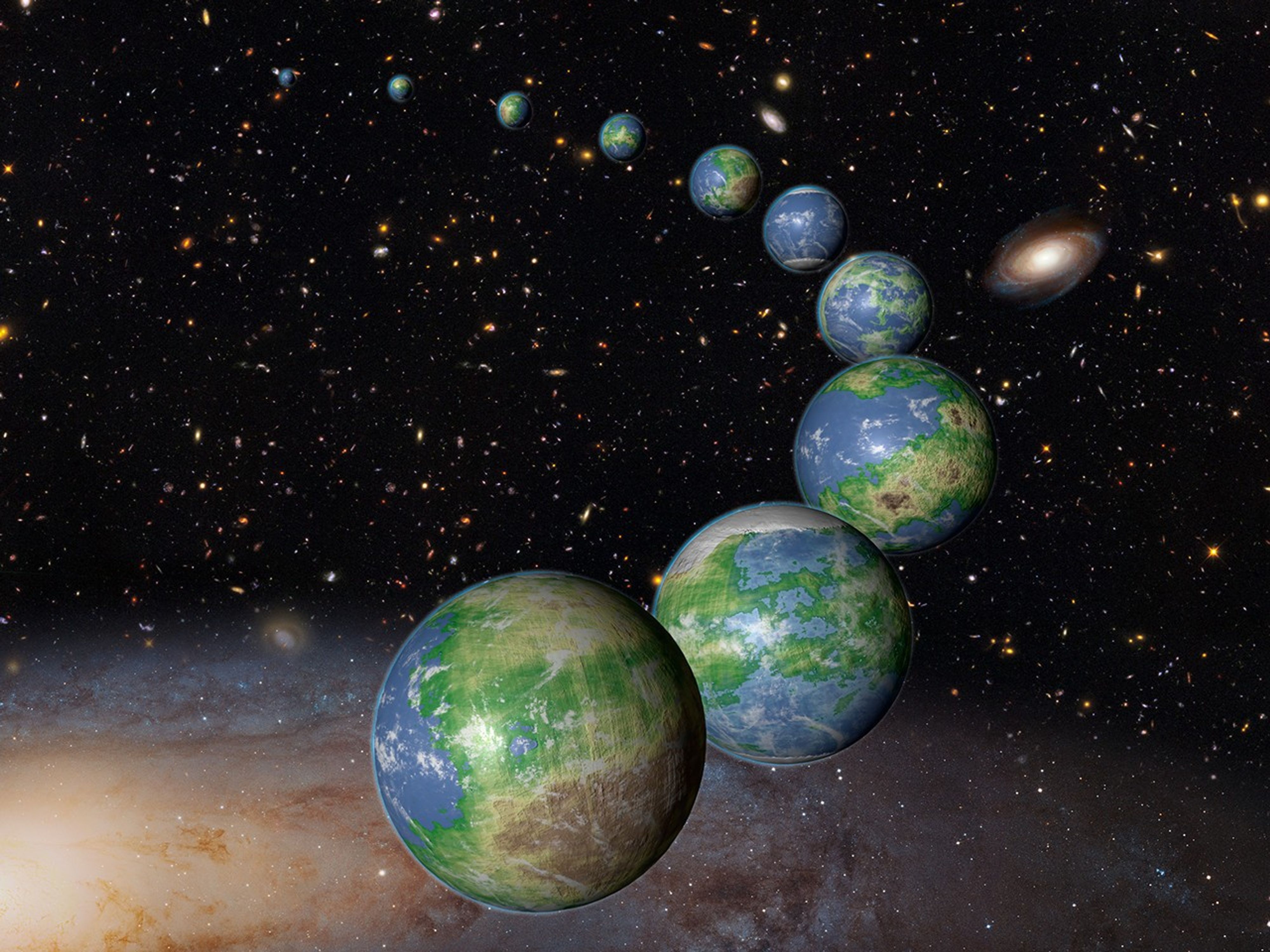 Image: NASA / JPL-Caltech
1. Exoplanets in the Solar Neighbourhood
Institution: Centro de Astrobiología (CAB, CSIC-INTA) • ESAC Campus
Supervisor: Dr. J.A. Caballero (Feb 2026 – Apr 2026)
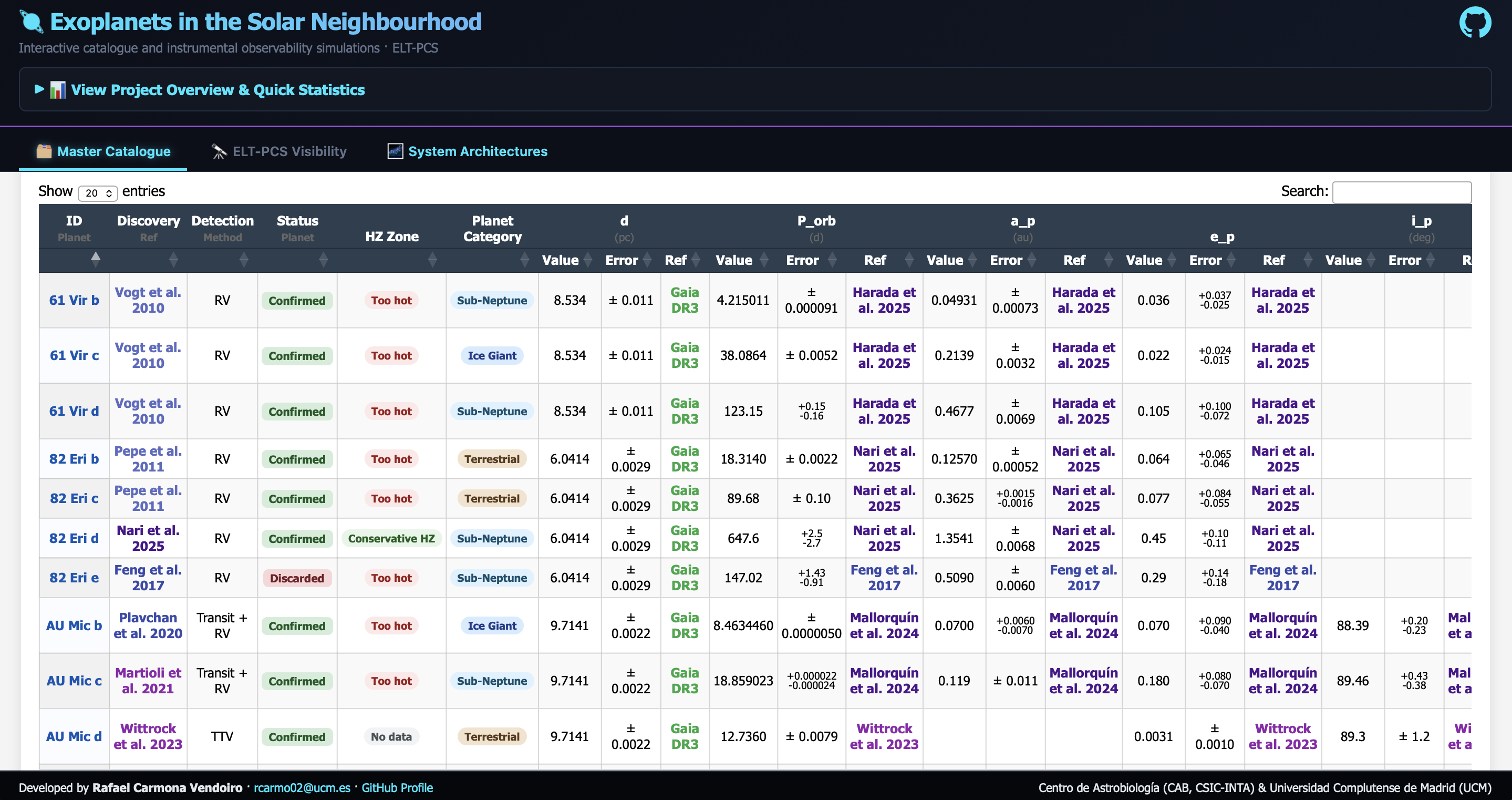
The goal of this project was to construct a unified, critically reviewed catalogue of all known exoplanetary systems within 10 parsecs (d < 10 pc) of the Sun to evaluate their habitability and direct imaging feasibility with next-generation instrumentation.
Key Achievements & Methodology:
- Data Pipeline & Automation: Developed an automated Python pipeline to ingest, filter, and standardize data from the NASA Exoplanet Archive and exoplanet.eu, updating host star properties.
- Literature Review & Signal Categorization: Conducted a comprehensive literature review validating physical and orbital parameters, categorizing signals into confirmed, candidate, or discarded statuses.
- Physical Modeling & Habitability: Programmed theoretical radius derivations using empirical mass-radius relations and analytically calculated planetary equilibrium temperatures and habitable zone boundaries.
- Direct Imaging Feasibility (ELT-PCS): Modeled planet-to-star flux ratios and angular separations across the nearby sample. Identified optimized high-interest targets (such as Proxima Centauri b and GJ 1061 d) detectable by the upcoming PCS instrument on the Extremely Large Telescope (ELT).
- Web Deployment & UI: Designed an interactive web interface featuring dynamic sorting (Pandas + DataTables.js) and custom visibility charts built with Plotly.
2. Bachelor's Thesis (TFG): "Characterization of Exoplanetary Systems"
Institution: Universidad Complutense de Madrid (UCM)
Supervisor: Dr. David Montes • Grade: Outstanding (9.6 / 10)
Focused on the detection, orbital fitting, and physical characterization of exoplanetary systems around the nearby M-dwarf stars GJ 486 and GJ 357.
Key Achievements & Methodology:
- Multi-Instrumental Analysis: Processed transit photometric light curves from the TESS satellite across multiple sectors using the
lightkurvePython package. Combined and analyzed a high-precision radial velocity (RV) dataset spanning an observational baseline of up to 22 years across five spectrographs: CARMENES, HARPS, HIRES, PFS, and UVES. - Advanced Bayesian Modeling: Implemented joint photometric and radial velocity fits using the
julietlibrary with nested sampling algorithms (dynesty). - Stellar Activity Mitigation: Incorporated Gaussian Process (GP) regression models based on the star's rotation period to model and mitigate stellar activity noise in the multiplanetary system GJ 357.
- Habitability Calculations & Astrobiology: Determined key physical parameters (mass, radius, mean density) of the rocky planets. Analytical calculations confirmed the position of GJ 357 d within the conservative habitable zone, evaluating its astrobiological potential for future space telescopes.